
The day-to-day repetitiveness of most school days can make a teen bored or overwhelmed. Genius Hour can alleviate those feelings, allowing students to choose projects that help them learn specifically about the things they’re interested in. Genius Hour allows teens to feel more motivated and independent, and helps them develop real-world readiness. Here’s everything you need to know about it and plenty of genius hour ideas to get them started.
What is Genius Hour?
Genius Hour is a dedicated time for self-directed learning and exploration, and it promotes creativity and ownership for teens as they get to focus on a passion project. The projects must be developed around a “driving question” that they’re curious about and guides the entire project. While students get to choose their topic and ideas, you can set rules to have them focus on a specific subject area or standard. For example, a science teacher may require the project to be based on a topic they’ve learned that year, while an english teacher may want students to focus on books.
The idea is that students get to decide to work on topics that they are actually interested in. This was inspired by Google’s 20% time rule, where Google employees were allowed to spend 20% of their time working on projects they were personally passionate about. The result is that when students get to choose, they are more focused and learn more from a place of genuine curiosity.
@good.learning.channel What Is Genius Hour An Overview Of Genius Hour And 20% Time In The Classroom!!! #education #classroms #creativity #teacher #starwars #darthvader #writingprompts #learning #teaching #designthinking #longervideo #vairal
♬ original sound – good learning channel – good learning channel
Why Genius Hour Works Well With Teens
Teens thrive during Genius Hour because it allows them to take control of their learning, and it motivates them to be lifelong learners. Teens are often exposed to a variety of topics online which they find interesting, but they cannot explore further in the classroom. For example, a teenager may have recently seen a lot of embroidery tiktoks and want to learn how to do it themselves and start a business around it.
Genius Hour helps teens develop time-management and goal-setting skills, plus they’ll practice problem-solving and resilience along the way. Since they are setting their own goals and deadlines, they are less likely to drag their feet along the way.
Lastly, Genius Hour can help with college applications. While good test scores and good grades are important for getting into college, more and more schools are seeking students who show passion in areas outside of the classroom. Genius Hour gives teens something great to talk about while applying to college.
How to Choose a Genius Hour Project
Students start by identifying topics that they are interested in. This could involve a brain dump of all the random interests that cross their mind, especially ones they don’t have time to explore. Then, they pick one area to focus on and turn it into a focused question. They could start with a few focused questions and narrow them down as they begin basic research.
Then, based on their driving question, they research, build, test, or create, using trial and error along the way. They’ll have a set amount of time to come up with their results, and then at the end, they share the finished product or findings.
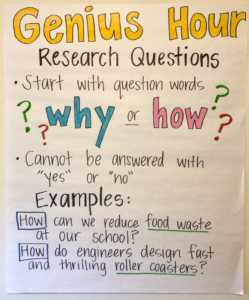
Driving Question Examples
A driving question is essential for every Genius Hour project. The question should begin with, “How can I…”, “How does…”, “Why does…”, “What if…”, “What would it take to…”, and similar open-ended concepts. It shouldn’t be a simple answer that you can find in a quick Google search.
- How can I design a low-cost method for reducing food waste in the school cafeteria?
- How can a small hydroponic garden grow enough food to share with others?
- What if I tested different study techniques to determine which works best?
- How can I bring awareness to an overlooked story in my community?
- How can I create a screen-time challenge teens will actually want to follow?
- What would I have to do to create a business that solves a problem at my school?
- Why and how do video games impact the brain?
- How can I make art from trash?
- Why do some awareness campaigns go viral online while others don’t?
- How is chemistry used in everyday cooking?
- How do the different seasons impact the Earth?
- How can I become a published author?
Genius Hour Project Ideas for Teens
Genius Hour ideas are limitless, and there’s really no wrong answer as long as the project involves the process. Here are some ideas teens will love.
@wagnersela And approximately 140 students are reading one more book before the school year ends. #finalcountdown #holdmyhand #geniushour #mrswagnerlovesyou
Entrepreneurship and Real-World Skills
If a student shows entrepreneurial ambition, then they might want to focus their genius hour around those topics.
- Start a school podcast.
- Create a student-led business.
- Build a website.
- Interview local business owners on how they started their business
- Create a course.
- Fix items and sell them on Facebook marketplace.
- Learn how to turn a hobby into an income.
- Design an app that solves a problem for teens.
- Develop a budget and test how you can save for a specific goal.
- Launch an online store on Shopify.
STEM Genius Hour Ideas for High School Students
STEM stands for science, technology, engineering, and mathematics. It has become incredibly popular among high school students. However, there are many of STEM topics such as robotics that are not covered in a normal high school curriculum. Genius Hour is a great place for students to explore those topics.
- Create a solar-powered phone charger.
- Build a Raspberry Pi project
- Determine local water quality and find solutions for improvement.
- Learn how to solder a circuit board.
- Design and test a product for sustainability.
- Find broken electronics and fix them.
- Learn 3D modeling and 3D printing.
- Run local air quality tests in various places around town.
Community and Social Impact Genius Hour Projects
Many students feel strongly about giving back to their communities. Teens can use their Genius Hour time to explore various topics for social impact.
- Create an awareness campaign about a topic important to you.
- Develop a school-wide program, like composting or recycling.
- Volunteer at a senior home.
- Design and advocate for a school garden or green space.
- Research and raise awareness about mental health resources for teens.
- Connect teens with volunteer opportunities.
- Promote local recycling.
- Clean up local trails and track how much trash was left.
Creative Genius Hour Ideas
Students are exposed to high amounts of creativity online, but are not always given time to explore those topics on their own. If a student has always wanted to pursue a creative endeavor, Genius Hour may be a great place to do so!
- Write and illustrate a children’s book.
- Create an original comic book or graphic novel.
- Write a poetry collection.
- Create a short documentary.
- Design a textbook teens actually want to read.
- Get into bird photography.
- Make a stop-motion film.
- Learn pottery techniques.
- Document the lives of elderly people in your community.
Digital Media Genius Hour Projects
Gen Z and Gen Alpha have completely grown up in the digital age, so it makes a lot of sense for them to be passionate about topics relating to digital media.
- Design an app around a topic.
- Create a digital museum exhibit.
- Learn animation software.
- Build a blog focused on a specific topic.
- Create a YouTube channel about a hobby you’re interested in.
- Make a website about local history and landmarks.
- Research how social media impacts a teen’s behavior.
- Start a newsletter for your town.
- Create commercials for local businesses.
- Film a really long time-lapse in nature using an old smartphone.
Personal Growth Genius Hour Projects
It is crucial for teens to develop personal growth skills to become high functioning adults. We are the results of the habits we build, and if teens can learn to develop good habits around personal growth, they will succeed much further in life. That being said, a Genius Hour idea focused around personal development can be incredibly rewarding.
- Come up with a new study method and test how well it works.
- Become a faster runner.
- Learn a new language.
- Document yourself learning a new skill.
- Create a beginner’s guide to something you’re passionate about.
- Learn a new swim stroke.
- Choose one part of your daily routine to improve and track the results to show the benefits.
- Track hydration and come up with tips to stay hydrated.
- Help coach a youth sports team.
How Parents Can Help
When your teen is choosing their interests and turning them into focus questions, you can help them narrow the ideas. You know what they like and enjoy, and you also know what is realistic and worth the time. Don’t discourage ideas they love, but try to guide their questions about those interests as best you can. Instead of directing their choices, ask curiosity-driven questions that lead them down a beneficial path.
You can also help them set realistic time expectations and even create specific tasks for their time blocks. Encourage them to track their progress throughout and celebrate their effort and learning, no matter the outcome.
If your teen’s school doesn’t have a Genius Hour or they are homeschooled, you can implement the idea at home. Follow the same processes, but choose a specific time that they do it in, so that it stays a priority and they have dedicated time for it.
When asking your teen guided questions, here are some to consider:
- What part of this topic is most interesting to you?
- What’s your next small step in this plan?
- What did you learn from that?
What if My Teen Says They Have No Interests
Many teens feel they have no interests, but that just means they need help determining what they are. Ask questions about what they spend the most time watching or reading, what frustrates them, what makes them excited, and what they would love to improve in their school or community.
These types of questions help them start thinking of the things they’re interested in, and the simple idea can make their curiosity grow into an action and a plan. If their first idea isn’t perfect, that’s okay. Let them see what will happen, and it will help them choose something better next time.