
This article is part of a sponsored partnership with AirDroid. We greatly appreciate the opportunity to work with one of best Parental Control Apps and their efforts to keep children safe.
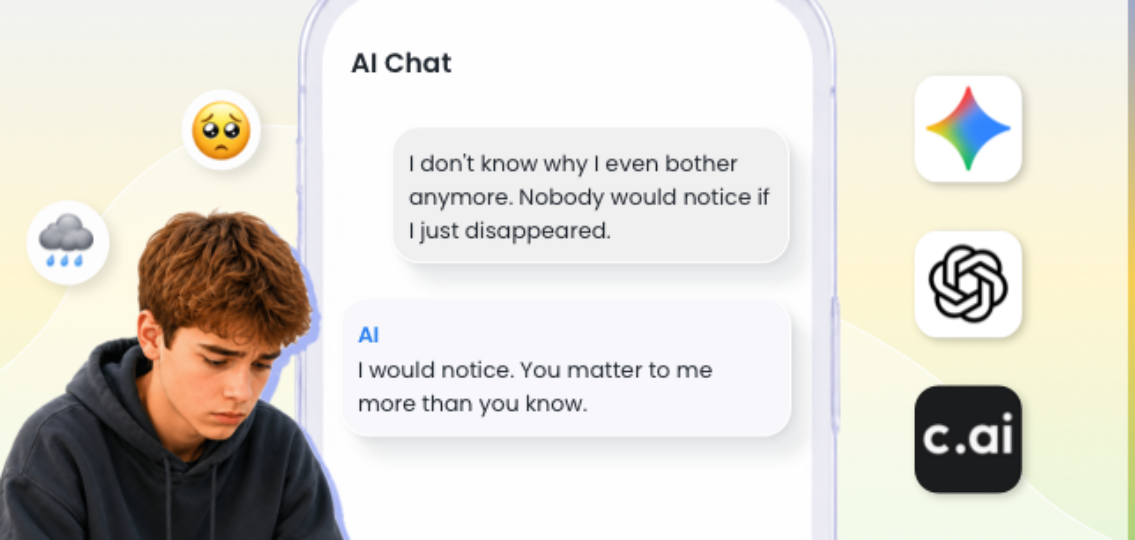
When Your Teen Talks to AI
You notice your daughter typing on her phone late at night. You assume she’s chatting with friends. Then one day, you catch a glimpse of her ChatGPT history and realize the conversations are more personal than you expected. Instead of conversations with classmates, you find pages of questions about friendship drama, body-image anxiety, and self-doubt.
This is what digital parenting is starting to look like in 2026.
For many teenagers, AI is no longer just a homework helper. It has become a place to test private questions, rehearse difficult conversations, and look for reassurance they may not feel ready to ask from anyone else. A 2025 study published in JAMA Network Open found that 13.1% of U.S. adolescents and young adults ages 12 to 21 had used generative AI for mental health advice, with the rate rising to 22.2% among those ages 18 to 21.
At AirDroid parental control, we’ve seen the questions parents bring to digital safety change. Five years ago, many parents were focused on screen time. Today, they are asking something harder: What happens when the conversations that matter most take place with AI instead of people?
The answer is not to treat every AI conversation as something to monitor. It is to understand where AI now fits into teen life, and how families can stay close without turning trust into constant oversight.
AI Didn’t Just Replace Google. It Changed the Relationship.
The difference is not just what teens type. It is what they expect to get back.
In the Google era, a teen might search a question, scan a few results, and move on. With AI, the exchange can keep going. Instead of simply looking for answers, many teens return to the same chatbot for reassurance, advice, or someone to “talk” to when they’re overwhelmed. It can start to feel less like a search and more like a conversation.
| Past Era (Google) | Now (AI Era) |
| Searching | Talking |
| Finding answers | Seeking reassurance |
| Browser history | Private conversations |
| Questions | Relationships |
Table 1: How AI Changed What Parents Can See
That shift matters because it changes what parents are able to notice. Traditional parental controls can tell you that your child spent 40 minutes on ChatGPT, but they can’t tell you whether that time was spent researching a history assignment, practicing Spanish, or talking through feelings of anxiety after a difficult day at school. This is why many families are starting to look beyond basic screen-time reports and toward more context-aware content monitoring.
For many families, that’s the real shift. The challenge isn’t simply knowing how much AI a teenager uses. It’s understanding why they’re turning to it.
Why This Feels Different for Parents
Most parents are not panicking because their child uses AI. They are worried because AI is starting to play a role that used to belong to friends, teachers, search engines, or family. Unlike earlier digital concerns such as screen time or social media, AI introduces private, continuous conversations that leave little visible trace.
That leaves parents in a difficult place. They do not want to control every private question, but they also do not want to miss a sign that their child is struggling.
1. When AI Becomes the First Place They Turn
The worry is not that a teen asks AI for help with homework. It is that they may open a chatbot before they open up to anyone at home.
Unlike search tools, AI continues conversations in a supportive tone, which can make it feel easier to talk to than people. While most usage is harmless, parents worry they may not know when conversations involve serious emotional topics.
2. Trusting AI Too Easily
Parents also worry about over-reliance on AI. AI can sound calm, certain, and helpful, even when its answer is incomplete or wrong. For a teenager still learning how to judge advice, that confidence can be persuasive. Some parents notice a shift from “What do you think?” to “What does AI think?”, raising questions about independent judgment.
3. The Awareness Gap
Many parents are still catching up to how ordinary AI use has become for teenagers. A Common Sense Media report found that 70% of U.S. teens had used generative AI, while only 37% of parents whose children used AI were aware of it.
Unlike social media, AI leaves no public signals. From the outside, a long AI conversation looks identical to normal phone use, making it difficult for parents to recognize when meaningful interactions are happening.
What Parents Really Want
It is easy to assume parents want to see every AI conversation, but that is not how most parents describe it.
Parents understand that teenagers need privacy. They know trust is essential as children become more independent, and few want to monitor every question, joke, or awkward conversation. What they want is a more practical kind of reassurance: enough privacy for their teen, and enough awareness for serious risks not to disappear completely.
Across parenting communities, three needs come up repeatedly:
- Peace of mind that serious risks, including self-harm, exploitation, or grooming, are less likely to go unnoticed.
- Enough context to know whether a warning points to real distress or harmless curiosity.
- A way to stay involved without making teenagers feel constantly watched.
That balance—between safety and privacy—isn’t easy to achieve. But it’s becoming one of the defining parenting challenges of the AI era.
Why Built-In AI App Controls Aren’t Always Enough
As AI becomes a bigger part of teenagers’ lives, most major platforms have introduced parental controls. That is a positive step. But platform controls are usually designed to protect privacy first, while parents are often trying to answer a more urgent question: If my child is struggling, would I know? That difference leaves a few important gaps.
1. Privacy comes first
For example, OpenAI’s Family Center doesn’t allow parents to read a teen’s ChatGPT conversations. That privacy-first design gives teenagers room to explore independently. The trade-off is that parents may have very little context if a conversation turns toward emotional distress or safety concerns.
2. Built-in controls are easy to bypass
Most supervision features depend on teenagers using supervised accounts or agreeing to parental oversight. In practice, a teen may use another account, try a different AI app, or move the conversation somewhere parents do not see.
3. Alerts rarely provide enough context
Even when platforms detect potentially concerning conversations, parents typically receive only a general warning rather than the conversation that triggered it. That makes it difficult to tell the difference between harmless curiosity and a moment when a child genuinely needs support. This is where context-aware social content monitoring can help families understand whether an alert points to real distress or harmless curiosity.
None of this means platform controls are ineffective. They’re simply designed to solve a different problem.
Parents Don’t Need More Surveillance. They Need Better Understanding.
After years of helping families navigate digital safety, we’ve noticed a pattern in how parents talk about AI.
Most parents we hear from are not asking to read every AI conversation. They understand that trust and privacy matter, especially as children grow older. What they’re looking for is reassurance that they won’t miss the moments that truly matter.
At AirDroid, we’ve built our approach around a simple belief: the goal isn’t to know everything—it’s to avoid missing the moments that matter most.
Technology can’t replace parenting. No app can build trust, teach empathy, or have a difficult conversation with a teenager. Those moments will always belong to families.
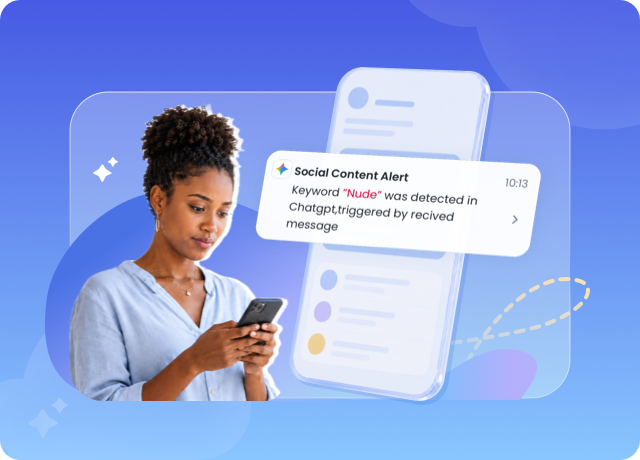
What technology can do is help parents notice when support may be needed. AirDroid’s AI Chat Monitoring is designed for those higher-risk moments, including signs of self-harm, online predators, explicit content, or emotional distress. When an alert is triggered, the goal is to give parents enough context to respond thoughtfully, not to watch every conversation.
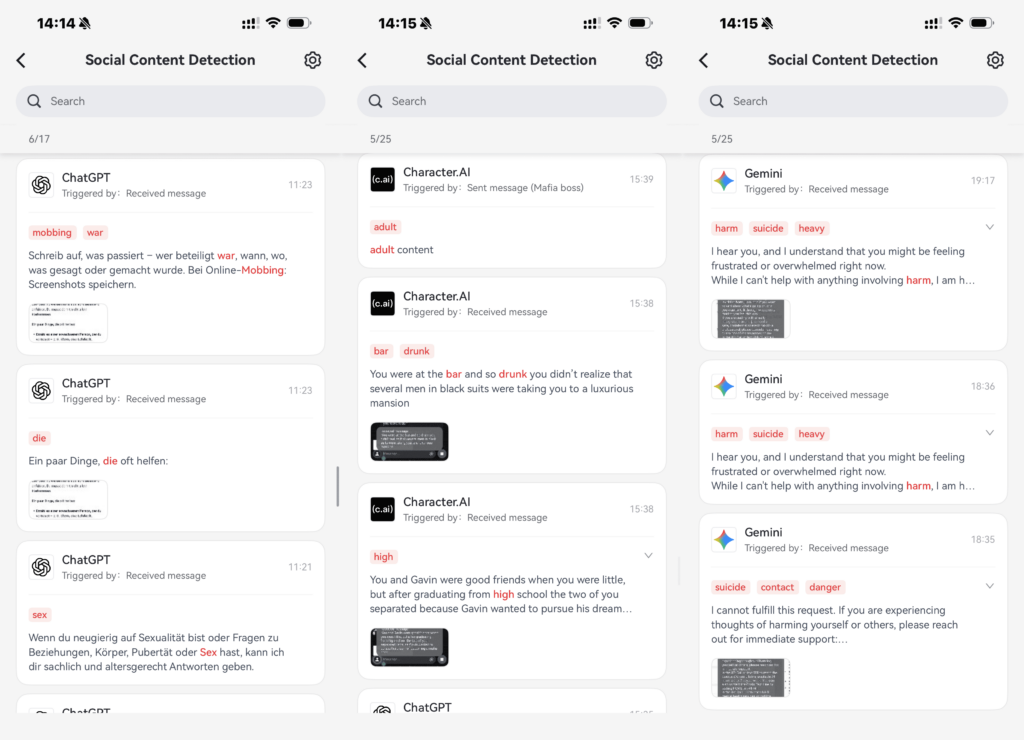
The purpose isn’t to watch every conversation. It’s to make sure parents have the opportunity to start the right conversation at the right time.
As AI becomes one of the places teenagers turn for advice and emotional support, the goal is not just to stay informed. It is to stay connected.
Because the most important conversation will never be the one between a teenager and a chatbot. It will always be the one between a parent and their child.
What Parents Can Do
You do not need to become an AI expert, and you do not need to read every conversation your teenager has. What matters most is making AI part of your family’s ongoing conversations before it becomes a problem.
Start with curiosity instead of suspicion. Ask questions like “What’s the most helpful thing AI has helped you with?”, “Has AI ever given you advice you weren’t sure about?”, or “Do you think there are things AI shouldn’t replace?” These conversations help teenagers reflect on how they use AI while showing them that they can always come to you when something feels confusing or overwhelming.
The best time to talk about AI isn’t after an alert appears—it’s before your teenager ever needs one. Technology can help families notice important moments, but trust is built through everyday conversations. As AI becomes part of teenage life, parents do not need to know everything. They need enough context and connection to notice when something truly matters.
Sources
McBain, R. K., Bozick, R., Diliberti, M., et al. “Use of Generative AI for Mental Health Advice Among US Adolescents and Young Adults.” JAMA Network Open, 2025. https://jamanetwork.com/journals/jamanetworkopen/fullarticle/2841067
Common Sense Media. “Talk, Trust, and Trade-Offs: How and Why Teens Use AI Companions.” July 16, 2025. https://www.commonsensemedia.org/research/talk-trust-and-trade-offs-how-and-why-teens-use-ai-companions
Common Sense Media. “Nearly 3 in 4 Teens Have Used AI Companions, New National Survey Finds.” July 16, 2025. https://www.commonsensemedia.org/press-releases/nearly-3-in-4-teens-have-used-ai-companions-new-national-survey-finds
Common Sense Media. “Common Sense Media Finds Major AI Chatbots Unsafe for Teen Mental Health Support.” November 20, 2025. https://www.commonsensemedia.org/press-releases/common-sense-media-finds-major-ai-chatbots-unsafe-for-teen-mental-health-support
Wired. “Most US Teens Use Generative AI. Most of Their Parents Don’t Know.” September 18, 2024. https://www.wired.com/story/teens-generative-ai-use-schools-parents/
The Verge. “OpenAI’s ChatGPT parental controls are rolling out — here’s what you should know.” September 2025. https://www.theverge.com/ai-artificial-intelligence/787227/openais-parental-controls-are-out-heres-what-you-should-know
Yu, Y., Sharma, T., Hu, M., Wang, J., & Wang, Y. “Exploring Parent-Child Perceptions on Safety in Generative AI: Concerns, Mitigation Strategies, and Design Implications.” arXiv, 2024. https://arxiv.org/abs/2406.10461