

Close your eyes and picture a beautiful summer day. Outside your window, your five-year-old daughter is chasing butterflies. Her red ringlets are bouncing, and she’s giggling non-stop. That was my five-year-old.
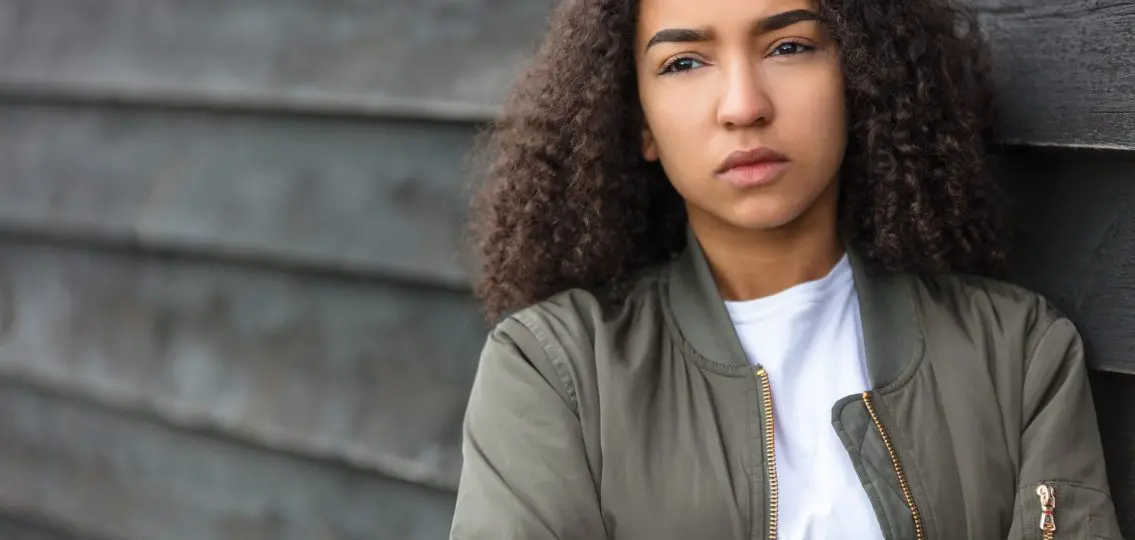
Close your eyes again and picture a dark, sullen, irritable teenager. She hates getting up for school, her grades are dropping, and she has been skipping classes. She’s secretive, ignores her curfew, and has been making small, superficial cuts on her arms with her razor. She listens to dark music with lyrics about death, blood and misery. She says she hates me, her home, her family and, at times, talks about not wanting to live. That’s my child, too.
How is this the same daughter who once chased butterflies?
There are many teens like my daughter. They come from loving homes with involved and caring parents. They are artistic, creative, intelligent, social and athletic. And like my daughter, they are engaged in self-destructive behavior.
Difficult Adolescence for Adopted Teens
Apparently, many adoptive teens have a difficult time in adolescence: their numbers in therapeutic programs are disproportionately high. I have gotten to know some of their parents because we belong to a support group for adoptive parents of struggling teens.
Many adopted teens struggle significantly with:
- identity
- fear of abandonment
- rejection
- self-esteem.
In our case, the change in our daughter was gradual and, at first, appeared to be normal adolescent behavior. She began to drift away from her activities and friends. She also began to identify with the alternative “Goth” culture.
We tried to be open to her desire to express herself differently. We hoped that she was simply experimenting with different identities in order to figure out who she would become.
But for our daughter, her behavior moved beyond normal adolescent experimentation. She became depressed and lost all interest in school and family. We became desperately concerned for her safety. When she refused to go to school and threatened to run away, we took rapid action that involved a therapeutic wilderness program and a therapeutic boarding school.
Extra Challenges for Adolescents who are Adopted
At the time, we did not know that her struggles might be related to adoption. We have since learned that these behaviors are not uncommon for adopted teens who may feel anger about abandonment by their birthparents and fear that it could happen again. These thoughts, while not always conscious, do drive behavior.
Adopted children have added struggles beyond typical adolescence. They need to connect to their past and we, their parents, must respect their feelings, talk to them about their birthparents and join them on their adoption journey, including the good and the bad.
Their lives are a puzzle with many missing pieces.
My husband and I were surprised that our open discussions about adoption were not enough. In fact, the absence of specifics about her birthparents may have contributed to some of our daughter’s struggles. Since she was little, we talked about her adoption and how lucky we felt to be her parents, but we hadn’t shared details about her birthparents. For instance, we never connected her artistic talent to her birthmother. We just never thought to share that with her.
Parents Supporting Each Other
Some parents in our group have reunited their children with birthmothers. We have not yet facilitated a reunion, nor have we shared some painful specifics about her birthparents. Also, we have not shared that she has half-siblings. Because of her current struggles, we are waiting for the “right” time.
The power of a parent support group has been enormous. I see people who, despite their deep love for their kids, still face serious difficulties. We are, in many ways, strangers to one another, but once a month, we come together and share intimate aspects of our parenting lives. We reveal untold secrets about our kids because we all “get it.”
Just knowing other parents with similar issues makes coping easier for me. We have also made conscious changes to our family life. We communicate better and more openly, and we discuss our children’s adoption more often.
The most important lesson for my husband and me is that as parents, we cannot control or fix every problem. This is their life and their journey, and we need to “let go” so they can take it with the ups and the downs. When they fall, we can help them up and show them love and support, but we are learning to let them experience the consequences of their mistakes.
Today, my daughter’s struggles are more typical of late adolescence. Her struggle with adoption may recur beyond adolescence and into adulthood, but our family is better equipped to cope. I believe, deep in my heart, that my daughter will become a wonderful adult and make contributions to society in her own special way. I now have a sense of hope and optimism that all but vanished a couple of years ago. And, thanks to my support group, I know that I’m not alone.
For questions or comments, email anadoptivemom@gmail.com.